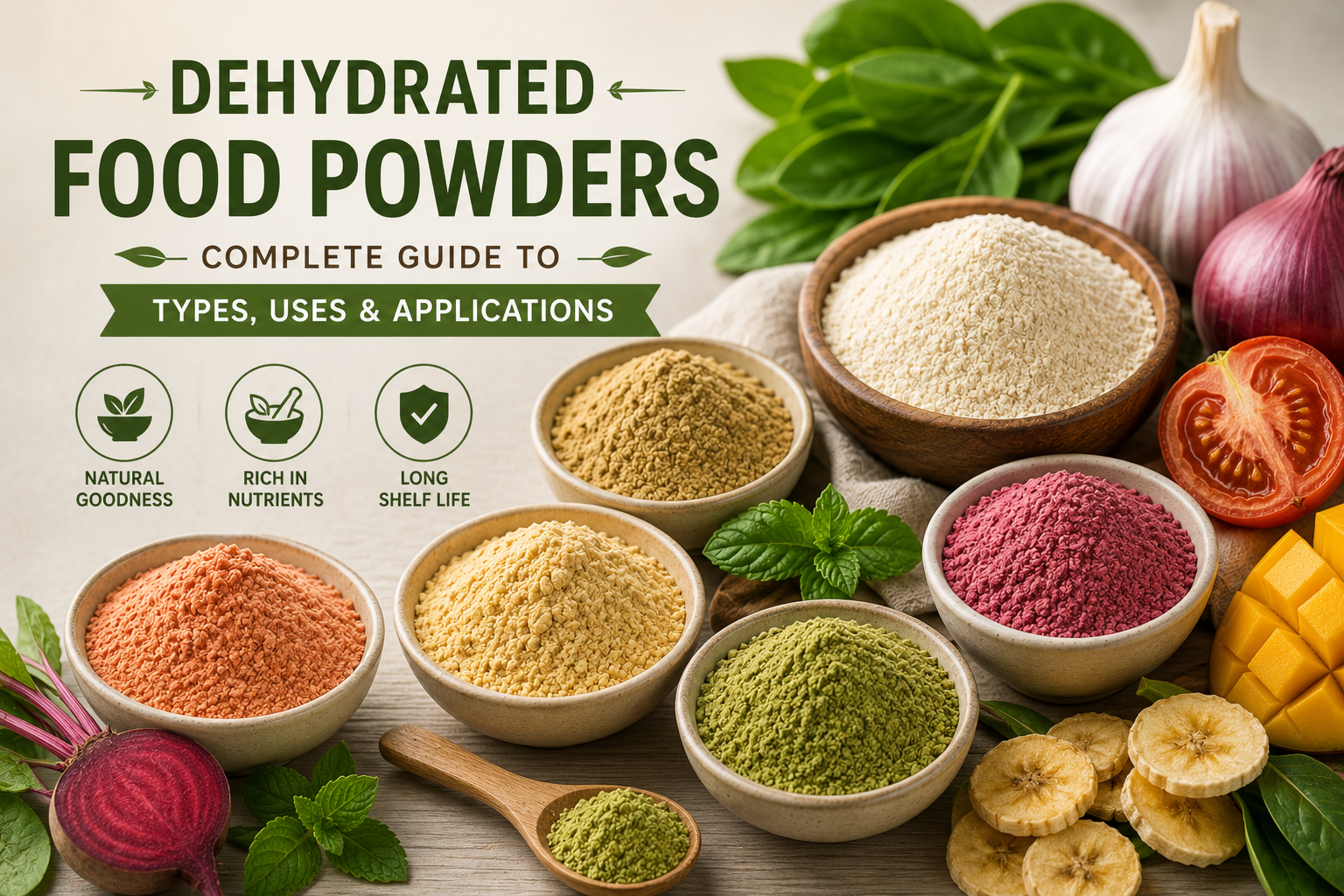
Dehydrated Food Powders: Complete Guide to Types, Uses & Applications
Dehydrated food powders have become valuable ingredients for businesses looking for convenience, consistency and longer storage life without depending entirely on fresh produce. From garlic and onion powder used in seasoning blends to moringa, ashwagandha and fruit powders used in wellness and food formulations, powdered ingredients support a wide range of commercial applications.
By removing a significant portion of moisture from fresh or processed raw materials, dehydration helps create ingredients that are easier to store, transport, measure and incorporate into different formulations. Depending on the product and processing method, the resulting powder can retain characteristic color, aroma, flavor and naturally occurring components of the original ingredient.
This guide explores the major types of dehydrated food powders, their applications, important quality considerations and the factors businesses should evaluate when sourcing them for domestic or international markets.
What Are Dehydrated Food Powders?
Dehydrated food powders are produced by reducing moisture from vegetables, fruits, herbs or other plant-based ingredients and processing the dried material into a suitable powdered form. The exact production process can vary according to the raw material, required particle size and intended application.
Compared with many fresh ingredients, powders can provide practical advantages for industrial users. They require less preparation, can simplify ingredient handling and allow measured quantities to be added directly to many formulations. Their compact form can also make storage and bulk transportation more manageable.
Main Types of Dehydrated Food Powders
Dehydrated powders can be grouped into several categories according to their source and intended use. At Maitra Veda Naturals, our product range focuses on vegetable powders, herbal powders and fruit powders for diverse commercial requirements.
1. Dehydrated Vegetable Powders
Vegetable powders are widely used by food processors, seasoning companies, snack producers, restaurants and ready-food brands. They can provide characteristic flavor, color and functional convenience while reducing the preparation required for fresh vegetables.
- Garlic Powder: Commonly used in seasoning blends, sauces, marinades, soups, snacks and ready-to-cook products.
- Onion Powder: Suitable for spice mixes, gravies, soups, sauces, savory snacks and processed food formulations.
- Tomato Powder: Used in soups, sauces, seasonings, snack coatings and selected instant food products.
- Beetroot Powder: Valued for its distinctive natural color and suitability for food, beverage and wellness formulations.
- Spinach Powder: Used in selected nutritional blends, soups, sauces, pasta products and plant-based food applications.
2. Dehydrated Herbal Powders
Herbal powders serve a different range of markets, including traditional wellness products, herbal formulations, nutraceutical applications and specialty food products. Product specifications and regulatory requirements can vary significantly depending on the destination country and intended use.
- Moringa Powder: Used in green blends, functional foods, nutritional formulations and wellness products.
- Ashwagandha Powder: Commonly sourced for traditional herbal and nutraceutical formulations.
- Tulsi Powder: Used in herbal preparations, wellness blends and selected beverage formulations.
- Mint Powder: Offers a refreshing herbal profile suitable for seasonings, beverages and food preparations.
- Curry Leaf Powder: Used in seasoning mixes, traditional recipes, convenience foods and specialty spice formulations.
3. Dehydrated Fruit Powders
Fruit powders offer manufacturers a convenient way to introduce fruit characteristics into suitable formulations. Depending on their composition and processing method, they may be used to contribute flavor, color or fruit-based positioning to finished products.
- Mango Powder: Suitable for beverages, confectionery, seasonings and selected food preparations.
- Banana Powder: Used in bakery products, beverage mixes, cereals and various nutritional formulations.
- Strawberry Powder: Popular in desserts, bakery applications, beverage mixes and confectionery products.
- Guava Powder: Suitable for fruit-based beverages, flavor blends and specialty food applications.
- Pineapple Powder: Used in tropical beverage mixes, bakery products, desserts and confectionery formulations.
How Are Dehydrated Food Powders Used?
One of the major advantages of powdered ingredients is their versatility. The same ingredient may serve different purposes depending on particle size, concentration, formulation requirements and processing conditions.
Seasonings and Spice Blends
Garlic, onion, tomato, mint and curry leaf powders can be incorporated into dry seasoning systems for snacks, instant foods, spice blends and culinary preparations. Their powdered form supports convenient mixing and controlled dosing.
Soups, Sauces and Ready Foods
Dehydrated vegetable powders can help food businesses develop convenient formulations where fresh ingredient preparation may not be practical. They are frequently considered for dry soup mixes, sauce bases, gravies and ready-to-cook products.
Beverages and Drink Mixes
Selected fruit and herbal powders can be used in beverage premixes, smoothies and specialty drink formulations. Manufacturers should select the appropriate powder according to solubility, flavor profile, particle characteristics and final product requirements.
Bakery and Confectionery
Fruit powders such as mango, banana, strawberry and pineapple can be incorporated into suitable bakery, dessert and confectionery formulations. The required quantity depends on the desired flavor intensity and characteristics of the finished product.
Nutraceutical and Wellness Products
Moringa, ashwagandha, tulsi and other herbal powders are commonly considered for wellness-oriented formulations. Businesses operating in this segment should verify ingredient specifications, testing requirements and applicable regulations before placing a product on the market.
Key Advantages of Using Dehydrated Powders
- Convenient Handling: Powdered ingredients can reduce washing, peeling, cutting and preparation requirements.
- Efficient Storage: Their compact format can simplify inventory management compared with equivalent quantities of fresh produce.
- Consistent Dosing: Standardized powders allow manufacturers to measure ingredients according to established formulations.
- Versatile Applications: Different powders can be used across food, beverage, seasoning and wellness industries.
- Reduced Dependence on Fresh Availability: Properly stored dehydrated ingredients can support production planning beyond seasonal fresh-produce availability.
- Export Convenience: Lower moisture and compact packaging can make suitable dehydrated ingredients practical for international trade.
What Should Buyers Check Before Sourcing Food Powders?
Price is only one factor when purchasing dehydrated ingredients in bulk. Professional buyers should evaluate specifications carefully to ensure that the selected product is suitable for their intended application.
- Product identity and raw material specifications
- Color, aroma, flavor and physical appearance
- Particle size or mesh requirements
- Moisture specifications
- Microbiological and quality parameters where applicable
- Ingredient composition and permitted additives, if any
- Packaging type and available bulk pack sizes
- Shelf life and recommended storage conditions
- Required certificates and supporting documentation
- Import regulations applicable in the destination country
Choosing the Right Powder for Your Application
Not every powder is suitable for every formulation. A product intended for a dry seasoning blend may require different characteristics from one intended for a beverage or nutraceutical application. Buyers should clearly communicate their required specifications, application, quantity and destination market before finalizing an order.
Sample evaluation can also be an important part of B2B sourcing. Testing a representative sample allows buyers to assess important characteristics before proceeding with larger commercial quantities.
Storage and Packaging Considerations
Dehydrated powders should generally be protected from moisture, excessive heat, direct sunlight and contamination. Packaging requirements may vary depending on the product, order quantity and transportation conditions. Food-grade inner packaging combined with suitable outer protection is commonly considered for commercial and export shipments.
After opening a package, proper resealing and storage practices are important because many powdered ingredients can absorb moisture from the surrounding environment.
Sourcing Dehydrated Food Powders from India
India has a diverse agricultural base and an established food ingredient supply ecosystem, making it an important sourcing destination for many vegetable, herbal and fruit-based products. International buyers can source ingredients for food processing, wholesale distribution, private-label development and other commercial applications.
When selecting an Indian supplier or exporter, buyers should consider product consistency, documentation capabilities, communication, packaging options and the ability to meet destination-market requirements.
Explore Dehydrated Powders from Maitra Veda Naturals
Maitra Veda Naturals offers a growing selection of dehydrated vegetable powders, herbal powders and fruit powders for domestic and international B2B requirements. Our focus is on connecting businesses with suitable ingredient solutions while supporting requirements related to product specifications, bulk quantities, packaging and export enquiries.
Whether you are sourcing garlic powder, onion powder, moringa powder, ashwagandha powder, mango powder, pineapple powder or other dehydrated ingredients, contact our team with your required product, quantity, specifications and destination country to discuss your sourcing requirements.
Conclusion
Dehydrated food powders provide a practical bridge between agricultural ingredients and modern commercial formulations. Their convenient format, broad range of applications and storage advantages make them useful across food processing, beverages, seasonings, bakery, confectionery and wellness industries.
For buyers, the key is to choose the right product specification rather than selecting an ingredient based on name or price alone. Understanding the intended application, quality parameters and destination-market requirements can help businesses build a more reliable ingredient sourcing strategy.